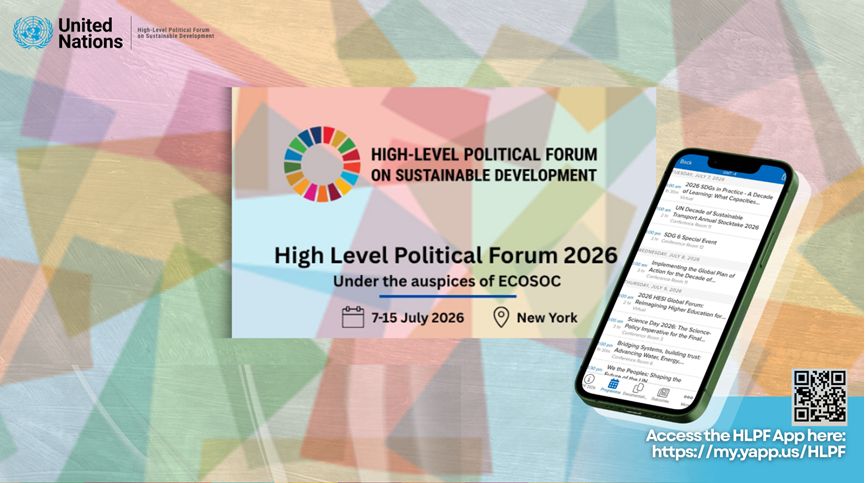
The Jordan Network for Education for All (JNEA) and the Arab Network for Civic Education (ANHRE) are participating in the 2026 High-Level Political Forum on Sustainable Development (HLPF 2026), held from 7–15 July 2026 under the auspices of the United Nations Economic and Social Council (ECOSOC), under the theme:
“Transformative, Equitable, Innovative and Coordinated Actions for the Implementation of the 2030 Agenda for Sustainable Development and its Goals for a Sustainable Future for All.”
This participation comes within the framework of efforts to strengthen the role of civil society in monitoring the implementation of the Sustainable Development Goals (SDGs), particularly SDG 4 on ensuring inclusive, equitable, and quality education for all, and contributing to shaping the global education agenda beyond 2030.
The National Coordinator of the Jordan Network for Education for All (JNEA), Ms. Abeer Darouze, is representing the Network at the Forum through two key engagements. The first is delivering the Jordanian civil society statement during the session presenting the Voluntary National Review (VNR) of the Hashemite Kingdom of Jordan, scheduled for 15 July 2026. During this session, she will present civil society perspectives on progress made in implementing the Sustainable Development Goals, with a focus on education-related issues and the importance of strengthening partnerships between government and civil society in developing education policies.
Ms. Darouze will also participate as a speaker in the side event organized by the Education and Academia Stakeholder Group (EASG) titled:
“From SDG 4 to Systemic Transformation: Education in the Post-2030 Agenda.”
She will present the experience of the Jordan Network for Education for All during the session titled:
“Ensuring the Right to Quality Education: Gender-Responsive Transformative Education in Emergencies,” highlighting key lessons learned from the Jordanian experience in advancing the right to education in contexts of crises and emergencies.
In parallel with Jordan’s submission of its Voluntary National Review, the Jordan Network for Education for All prepared a Civil Society Spotlight Report on the State of Education in Jordan through a participatory process that included the development of a national survey involving coalition member organizations, consultation meetings, and the collection and analysis of evidence from network members and various education stakeholders. This process resulted in the preparation and endorsement of the report. The Network also submitted a set of recommendations to the Ministry of Planning and International Cooperation to support the preparation of the VNR and strengthen the inclusion of education priorities in the national report.
As part of its contribution to the Forum’s work, the Jordan Network for Education for All contributed to the preparation of the Sectoral Paper of the Education and Academia Stakeholder Group (EASG), which was submitted to the Forum through the Major Groups and Other Stakeholders (MGoS) mechanism. The paper was informed by the findings of the civil society Spotlight Report on the State of Education in Jordan, prepared by the Network, and included recommendations to strengthen the role of education in achieving the Sustainable Development Goals and contributing to shaping the post-2030 education agenda.
The Jordan Network for Education for All and the Arab Network for Civic Education reaffirmed that their participation in the Forum reflects their continued commitment to advancing the right to education, strengthening the presence of Arab civil society in international forums, and contributing to the development of education policies based on justice, equity, and inclusion. These efforts support the achievement of the Sustainable Development Goals and contribute to shaping the future of education at both national and regional levels.
To access the Education and Academia Stakeholder Group (EASG) Sectoral Paper, click here.
To access the Spotlight Report, click here.